Abraham Lincoln is one of the most prominent figures in American history, known for his leadership during one of the most tumultuous periods in the country's history: the Civil War. Born in Hodgenville, Kentucky in 1809, Lincoln grew up in a log cabin and worked as a laborer and a shopkeeper before entering politics. He was elected as the 16th President of the United States in 1860 and served in this position until his assassination in 1865.
Motivational quotes attributed to George Washington: "Happiness and moral duty are inseparably connected."
"Let us with caution indulge the supposition that morality can be maintained without religion. Reason and experience both forbid us to expect that national morality can prevail in exclusion of religious principle."
Washington's Correspondence: The Art of Letter Writing
Introduction:
In an era before instant messaging and digital communication, letter writing was an art form that captured the essence of personal and political interactions. At the forefront of this practice was George Washington, whose extensive correspondence not only provides a window into his thoughts and actions but also exemplifies the artistry and nuances of 18th-century letter writing. This exploration delves into the significance of Washington's correspondence, the stylistic elements that defined his letters, and the enduring impact of his written words on American history.
George Washington was a pivotal figure in the founding of the United States of America. He served as the first President of the United States from 1789 to 1797 and was instrumental in the development of the American political system. Washington was a key figure in the American Revolution and is known for his leadership skills, military tactics, and political acumen.
Washington was born on February 22, 1732, in Westmoreland County, Virginia. He grew up on a tobacco plantation and was educated by private tutors. As a young man, Washington worked as a surveyor and then served in the Virginia militia during the French and Indian War. In 1759, he resigned his commission and returned to Mount Vernon, his family estate.
Washington became involved in politics and was elected to the Virginia House of Burgesses in 1758. He was a strong advocate for colonial rights and was one of the leaders of the movement to boycott British goods. In 1774, Washington was elected as a delegate to the First Continental Congress, which was held in Philadelphia. The Congress was called to address the growing tensions between the colonies and Great Britain, which had been escalating since the passage of the Stamp Act in 1765.
Washington was a delegate to the Second Continental Congress, which convened in May 1775, just after the start of the American Revolution. He was appointed as commander-in-chief of the Continental Army, which was formed to fight the British forces. Washington led the army through a number of victories and defeats, but his leadership was critical in securing the final victory at the Battle of Yorktown in 1781.
After the war, Washington returned to Mount Vernon and retired from public life. He was soon called back to service when he was elected as President of the Constitutional Convention in 1787. The Convention was held in Philadelphia and was responsible for drafting the United States Constitution. Washington played a key role in the Convention and was a strong advocate for the adoption of the Constitution.
In 1789, Washington was unanimously elected as the first President of the United States. He served two terms in office and was instrumental in the development of the American political system. Washington was a strong advocate for a strong federal government and played a key role in the development of the executive, legislative, and judicial branches of government.
Washington was known for his strong leadership skills and his commitment to the ideals of democracy. He was a strong advocate for civil liberties and played a key role in the development of the Bill of Rights. Washington was also a strong advocate for religious tolerance and was instrumental in the development of the First Amendment, which guarantees the freedom of religion.
Washington was a man of many talents and interests. He was an avid farmer and spent much of his time at Mount Vernon tending to his crops and livestock. He was also an accomplished horseman and enjoyed fox hunting. Washington was a skilled military tactician and was known for his ability to inspire his troops.
Washington was also a man of great personal integrity. He was known for his honesty and his commitment to his principles. Washington was a strong advocate for the rule of law and played a key role in the development of the American legal system. He was also a strong advocate for education and played a key role in the development of the American public school system.
George Washington is widely regarded as one of the greatest American leaders in history. He was a key figure in the founding of the United States of America and played a critical role in the development of the American political system. Washington's legacy continues to inspire people around the world and his contributions to American democracy will never be forgotten.
Despite his many accomplishments, Washington faced numerous challenges throughout his life. As a young man, he struggled to establish himself as a successful planter and businessman. He also faced significant opposition during his presidency, particularly from those who disagreed with his vision for a strong federal government.
Washington's legacy has also been complicated by his ownership of slaves. Although he expressed concerns about the institution of slavery and eventually took steps to free his own slaves, he continued to own slaves throughout his life. This has led to ongoing discussions and debates about Washington's place in American history and his role in the legacy of slavery in the United States.
Despite these challenges, Washington's contributions to American democracy and his legacy as a leader and statesman continue to inspire people around the world. He was a man of great courage and conviction, and his example has continued to shape American political culture to this day.
One of the most notable aspects of Washington's leadership was his commitment to the principle of civilian control of the military. Throughout his military career and his presidency, he consistently emphasized the importance of a strong civilian government and the need to avoid the dangers of a standing army. This commitment to the principles of democracy and republican government helped to set a precedent for future leaders and continues to shape American political culture today.
Washington's legacy has also been shaped by his leadership during the American Revolution. Although he faced many challenges and setbacks during the war, he was able to rally his troops and lead them to victory against the British. His leadership and military tactics were critical in securing the final victory at the Battle of Yorktown, which effectively ended the war and secured American independence.
Washington's presidency was marked by many significant achievements as well. He oversaw the development of the federal government, including the establishment of the executive, legislative, and judicial branches. He also played a key role in the development of the American economy, supporting policies such as a national bank and a system of tariffs to promote economic growth and stability.
Washington's commitment to democratic principles and his role in the founding of the United States of America have made him a symbol of American patriotism and a hero to many. His legacy continues to inspire people around the world, and his contributions to American democracy will be remembered for generations to come.
One of Washington's most enduring legacies is his farewell address, which he delivered in 1796 as he prepared to leave office at the end of his second term. In this address, Washington emphasized the importance of unity, political moderation, and national sovereignty. He also warned against the dangers of political factions and foreign entanglements, urging Americans to maintain their independence and avoid becoming involved in European conflicts.
Washington's farewell address remains a powerful statement of American political values and has been cited by many political leaders throughout history. It reflects Washington's commitment to the principles of republican government, civic virtue, and civic responsibility.
Washington's influence on American political culture has also been reflected in the many monuments and memorials dedicated to him throughout the United States. Perhaps the most famous of these is the Washington Monument, a 555-foot obelisk located on the National Mall in Washington, D.C. The monument was completed in 1884 and stands as a powerful symbol of American patriotism and national identity.
Washington's influence has also been felt in the many books, films, and other works of art that have been inspired by his life and legacy. Some of the most notable examples include the Pulitzer Prize-winning biography "George Washington: A Life" by Ron Chernow, the acclaimed HBO miniseries "John Adams," and the hit Broadway musical "Hamilton."
In recent years, there has been renewed interest in Washington's life and legacy, as scholars and historians have sought to reassess his contributions and his place in American history. Some have criticized his ownership of slaves and his treatment of Native Americans, while others have celebrated his commitment to democracy and his role in shaping the American political system.
Despite these debates and controversies, there is no doubt that George Washington remains one of the most important figures in American history. His leadership, courage, and commitment to democratic principles continue to inspire people around the world, and his legacy will continue to shape American political culture for generations to come.
Marilyn Monroe was a Hollywood icon known for her beauty, talent, and charisma. Here are some of her motivational quotes:
"I believe that everything happens for a reason. People change so that you can learn to let go, things go wrong so that you appreciate them when they're right, you believe lies so you eventually learn to trust no one but yourself, and sometimes good things fall apart so better things can fall together."
Marilyn Monroe was an iconic American actress, model, and singer who became one of the most famous and influential figures of the 20th century. Born on June 1, 1926, in Los Angeles, California, as Norma Jeane Mortenson, she grew up in foster care and faced a difficult childhood. However, she persevered and went on to become one of the most recognizable faces of her time, known for her beauty, charm, and charisma.
Personal Growth and Character Development: Lessons from the Life of Abraham Lincoln
Personal growth and character development are lifelong journeys that shape who we are and how we navigate the world around us. Few figures exemplify the transformative power of personal growth and character development as profoundly as Abraham Lincoln, the 16th President of the United States. From his humble beginnings in a log cabin on the American frontier to his tenure in the highest office in the land, Lincoln's journey of self-discovery and moral growth offers valuable insights into the process of becoming the best version of oneself. This essay will explore Lincoln's personal growth and character development, examining the challenges he faced, the lessons he learned, and the enduring legacy of his example.
Legacy and Enduring Impact: Abraham Lincoln's Indelible Mark on History
Abraham Lincoln, the 16th President of the United States, left an indelible mark on history that continues to resonate with people around the world. His legacy is one of courage, leadership, and moral clarity, shaped by his unwavering commitment to the principles of democracy, equality, and human dignity. From his humble beginnings on the American frontier to his tenure in the highest office in the land, Lincoln's impact on the nation and the world is profound and enduring. This essay will explore Lincoln's legacy and enduring impact, examining his contributions to American society, his influence on subsequent generations of leaders, and the lessons we can learn from his example.
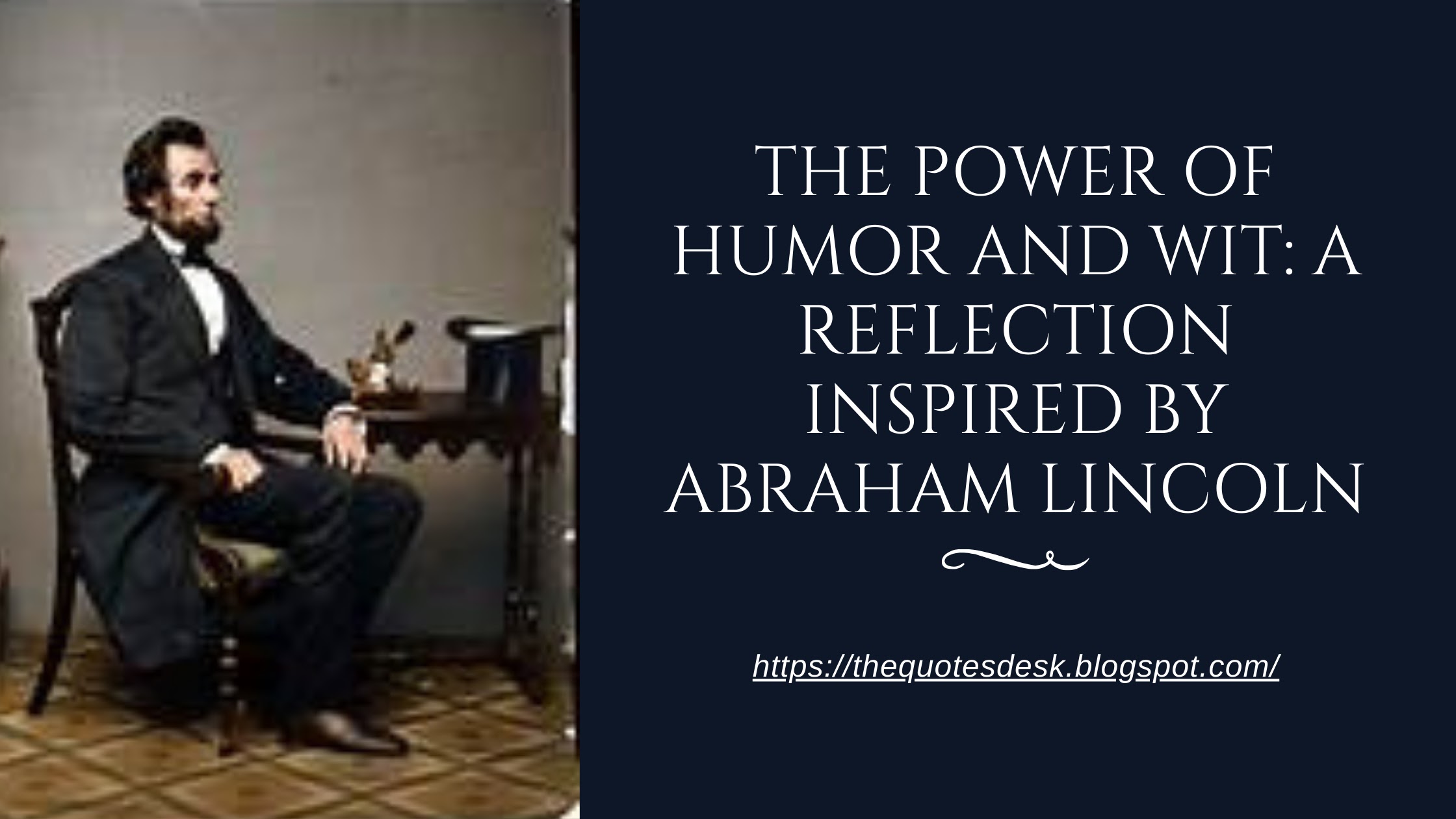
The Power of Humor and Wit: A Reflection Inspired by Abraham Lincoln
Humor and wit are powerful tools that can disarm adversaries, bridge divides, and provide much-needed relief in times of adversity. Few figures in history embodied the art of wit and humor as profoundly as Abraham Lincoln, the 16th President of the United States. Despite the weighty responsibilities of his office and the challenges of leading a nation through the turmoil of the Civil War, Lincoln maintained a keen sense of humor and a quick wit that endeared him to friends and foes alike. This essay will explore the role of humor and wit in Lincoln's life and leadership, examining how he used these qualities to connect with others, diffuse tension, and navigate the complexities of political life.
Citizenship and Civic Responsibility: Lessons from Abraham Lincoln
Citizenship and civic responsibility are foundational principles in any democratic society, and few figures embody these ideals more profoundly than Abraham Lincoln, the 16th President of the United States. Throughout his life, Lincoln demonstrated a deep commitment to the principles of democracy, equality, and civic engagement, inspiring generations of Americans to actively participate in the democratic process and uphold the rights and responsibilities of citizenship. This essay will explore Lincoln's understanding of citizenship and civic responsibility, examining the challenges he faced, the actions he took to promote civic engagement, and the enduring lessons we can learn from his example.
Unity and National Identity: The Vision ofAbraham Lincoln
Abraham Lincoln, the 16th President of the United States, is remembered as a unifier, a leader who sought to mend the deep divisions that threatened to tear the nation apart during the Civil War. His vision of unity and national identity was rooted in the belief that the United States was a "government of the people, by the people, for the people," as he famously proclaimed in his Gettysburg Address. This essay will explore Lincoln's vision of unity and national identity, examining the challenges he faced, the strategies he employed to foster unity, and the enduring legacy of his leadership.
Education and Self-Improvement: The Lifelong Pursuit of Abraham Lincoln
Abraham Lincoln, the 16th President of the United States, is often celebrated for his extraordinary intellect, eloquence, and leadership. However, what is perhaps less known is the remarkable journey of self-education and self-improvement that shaped Lincoln's character and influenced his path to greatness. From his humble beginnings in a log cabin on the American frontier to the highest office in the land, Lincoln's commitment to education and self-improvement served as the cornerstone of his success. This essay will explore Abraham Lincoln's lifelong pursuit of education and self-improvement, examining the sources of his learning, the impact it had on his personal and professional life, and the enduring lessons we can learn from his example.
Equality and Justice: Abraham Lincoln's Enduring Legacy
Abraham Lincoln, the 16th President of the United States, is widely revered for his unwavering commitment to equality and justice. Throughout his life, Lincoln advocated for the rights and dignity of all individuals, regardless of race, religion, or background. His leadership during one of the nation's darkest periods, the Civil War, was guided by a profound belief in the principles of equality and justice, which he sought to uphold through his policies and actions. This essay will explore Abraham Lincoln's enduring legacy of equality and justice, examining the challenges he faced, the decisions he made, and the lessons we can learn from his example.
Abraham Lincoln, the 16th President of the United States, is often remembered for his remarkable optimism and unwavering hope, even in the face of adversity. Throughout his life, Lincoln faced numerous challenges and setbacks, yet he maintained a steadfast belief in the resilience of the human spirit and the promise of a better future. This essay will explore Lincoln's optimism and hope, examining the sources of his positive outlook, the role they played in his personal and political life, and their enduring legacy.
Abraham Lincoln, the 16th President of the United States, is revered not only for his leadership during one of the nation's most tumultuous periods but also for his unwavering integrity. His presidency, which spanned from 1861 to 1865, coincided with the American Civil War and was marked by profound challenges and crises. Throughout his tenure, Lincoln demonstrated exceptional leadership qualities and an unyielding commitment to moral principles, earning him a place among the greatest leaders in history. This essay will delve into Abraham Lincoln's leadership style and the integral role that integrity played in his presidency, examining his decisions, actions, and enduring legacy.
Abraham Lincoln, the 16th President of the United States, is renowned for his steadfast perseverance and unwavering resilience in the face of adversity. His life story is a testament to the power of determination, resilience, and the human spirit. From his humble beginnings in a log cabin to his leadership during one of the nation's darkest periods, Lincoln's journey exemplifies the triumph of perseverance over adversity. This essay will explore the life of Abraham Lincoln, focusing on his remarkable perseverance and resilience, and the lessons we can learn from his experiences.
Abraham Lincoln: From Humble Beginnings to American Icon
Early Life and Humble Beginnings
Abraham Lincoln was born on February 12, 1809, in a one-room log cabin on the Sinking Spring Farm in Hardin County, Kentucky, which is now part of LaRue County. His parents, Thomas and Nancy Hanks Lincoln, were poor farmers. Lincoln's early life was marked by poverty and hard labor. He often described his upbringing as being "the short and simple annals of the poor."
Lincoln had a limited formal education, amounting to no more than a year of schooling. Despite this, he was an avid reader and had an insatiable thirst for knowledge. He borrowed books from neighbors and walked miles to acquire reading material. Among his favorite books were the Bible, Aesop's Fables, and works by William Shakespeare. This self-education laid the foundation for his future eloquence and political thought.
"Always think big, because big dreams lead to big accomplishments." "Success comes to those who are bold enough to take risks." "Believe in yourself, and others will believe in you too." "The harder you work, the luckier you get." "Never give up, because winners never quit and quitters never win."
The legacy of George Washington, the revered Founding Father and the first President of the United States, extends far beyond the 18th century. In this exploration, we delve into the enduring impact of Washington's principles, leadership style, and the precedents he set during his presidency on modern American politics. From his visionary farewell address to his influence on constitutional interpretation, Washington's legacy continues to shape the political landscape, offering insights and guidance for contemporary leaders and citizens alike.
George Washington and the Constitution: Shaping the Nation
Introduction:
The birth of the United States of America, a nation conceived in the crucible of revolution, owes much to the visionary leadership of George Washington. As the nation's first president, Washington's impact on the shaping of the U.S. Constitution is profound and enduring. This exploration delves into the pivotal role Washington played during the Constitutional Convention, his advocacy for a stronger central government, and the far-reaching implications of his leadership on the formation of the American constitutional framework.

.jpg "Abraham Lincoln is known for his leadership")









.jpg)

